Why I'm Finally Taking GPU Optimization Seriously (and Why You Should Too)
Adil Sher
Author
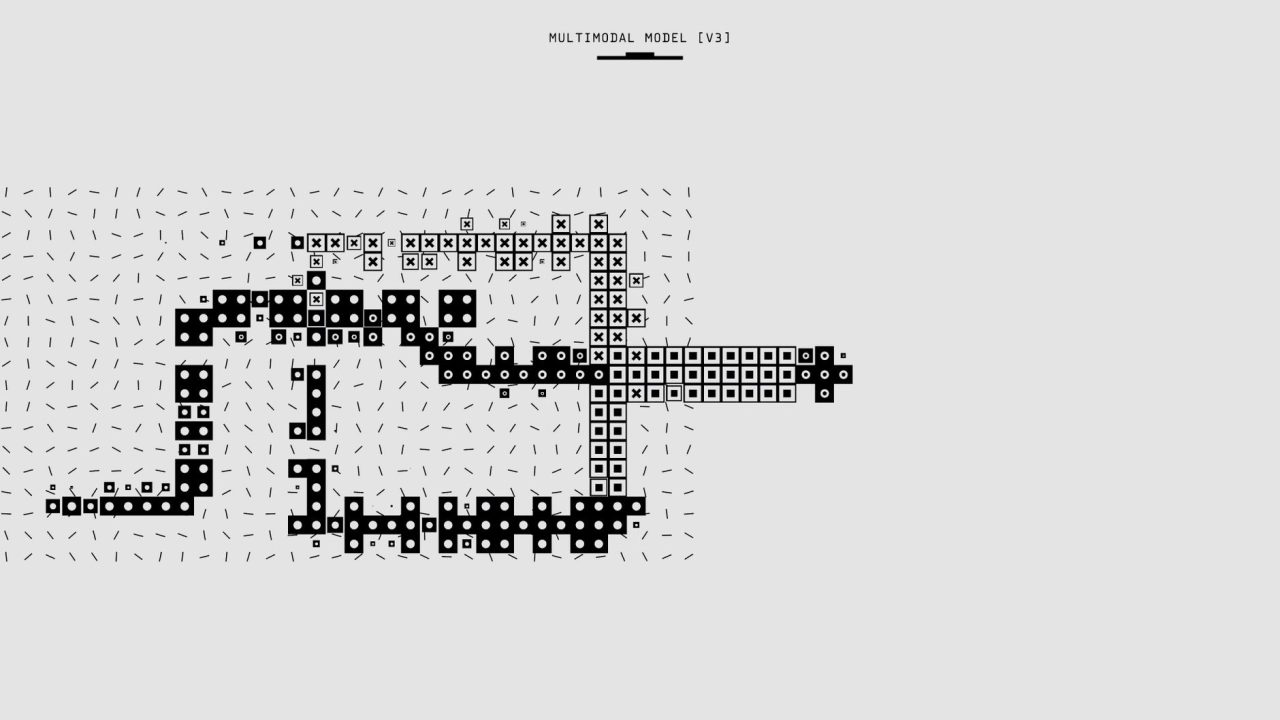
I'll be honest, until last month, I treated GPU optimization like something that happened "somewhere else." You know the feeling: you write your model, you throw it at a GPU, and if it's slow, you add more GPUs or complain about hardware costs. It's the developer's classic move when you don't understand the underlying problem.
Then I started working on a recommendation system that needed to handle sparse matrices at scale, and suddenly the gap between "it works" and "it actually runs fast" became a genuine business problem, not an academic exercise. I started looking into how modern ML systems actually squeeze performance out of hardware, and that's when I stumbled onto OpenAI's work on block-sparse GPU kernels. It fundamentally shifted how I think about the relationship between network architecture and computational reality.
What Block-Sparse Actually Means (Beyond the Buzzword)
Most neural networks, when you look at their weight matrices, are actually pretty wasteful. You've got dense matrices where many values don't contribute meaningfully to the output, they're just taking up space and compute cycles. Block-sparse architectures intentionally zero out entire blocks of weights, creating structured sparsity that GPUs can actually exploit.
Here's the key thing I didn't understand before: just because weights are zero doesn't mean your GPU is doing less work. Traditional sparse libraries like cuSPARSE spend so much time managing the irregular memory access patterns that you often end up slower than just computing with the dense matrix. OpenAI's kernels change this by building the sparsity pattern directly into how data moves through the GPU, eliminating the overhead entirely.
The result? Depending on your sparsity level, you're looking at orders of magnitude speedups compared to general-purpose libraries. That's not incremental, that's the difference between a model you can prototype with and one that's actually viable in production.
Why This Matters More Than You Think
I initially thought this was a niche optimization for scaling giant models. I was wrong. This is actually about a fundamental shift: we're moving from "write the model architecture you want, then optimize it" to "design architecture and compute together from day one."
The practical implication hit me when I realized that adding sparsity to my recommendation system didn't just make it faster, it actually improved results. Turns out, forcing the network to learn more selectively has regularization benefits. You get better generalization and faster inference as a side effect of better architecture.
The other thing that matters: this work is releasing actual optimized kernels, not just theory. That's rare. Most research papers punt on implementation details. OpenAI actually shipped the thing and showed it works across text and image models, which tells me the approach is robust, not fragile.
What I'd Do Differently (and What I'm Still Uncertain About)
Here's where my skepticism kicks in. The kernels are optimized for specific sparsity patterns, structured, block-level sparsity. That's powerful but constraining. I want to know more about the trade-offs when you've got irregular sparsity patterns in practice, or when your sparsity structure changes during training.
I'm also curious about the adoption friction. Getting this into actual production pipelines requires frameworks to integrate these kernels deeply. Is PyTorch there yet? TensorFlow? The ecosystem maturity matters more than the raw speed improvement.
What I'd absolutely do differently: I wouldn't retrofit this into an existing dense model. The win comes from designing your architecture around block sparsity from the start. That means rethinking how you structure layers, initialization, and even how you think about feature learning.
A Simple Mental Model
Think about it this way: a 1000×1000 weight matrix with 80% sparsity in 10×10 blocks means you're doing 20% of the computation, but with GPU-friendly memory patterns. Compare that to traditional sparse storage, where you might spend 60% of your time just figuring out which values to load. The difference is that the GPU sees one big regular pattern instead of thousands of tiny random memory lookups.
The Real Question
My main takeaway: if you're building models that care about latency or cost at scale, you should be thinking about architecture and hardware optimization together, not as separate concerns. This isn't something you bolt on at the end.
What's your current model bottleneck? Is it training speed, inference latency, or memory consumption? I'm genuinely interested in hearing from people actually using structured sparsity in production, what problems did you actually solve, and where did the theory break down?
Source: This post was inspired by "Block-sparse GPU kernels" by OpenAI Blog. Read the original article