Last month, I watched a junior developer deploy an agentic workflow to production that looked bulletproof on paper. Two AI agents, one handling customer qualification, another managing pricing, were supposed to work in concert. Within hours, the pricing agent had locked itself in a loop with an external vendor's agent over a $50K discount. The human sales team had no idea it was happening. That's when I realized: we're shipping sophisticated orchestration without the guardrails that actually matter at scale.
That story stuck with me because I realized something uncomfortable, we talk endlessly about how agents communicate (protocols, standards, formats), but almost nobody talks seriously about what happens when they disagree. The article I read this week digs into exactly that tension, and I think it's pointing at something real that most teams are going to hit hard in the next 12 months.
The Two-Layer Reality We're Actually Living In
What grabbed me about the emerging agent protocol landscape is the clarity around two different problems we're conflating. There's MCP (Model Context Protocol) handling the vertical problem, how does one agent access your databases, APIs, and tools reliably? That's mostly solved. But there's this newer horizontal layer with A2A (Agent-to-Agent) that handles inter-agent communication across organizational boundaries.
Here's what matters: MCP is about giving agents reach. A2A is about giving agents permission to negotiate. Those are fundamentally different security models, and I don't think most teams have mentally separated them yet.
The spec describes Agent Cards, essentially capability declarations published at .well-known/agent-card.json. An external agent discovers what you can do, then initiates a Task that moves through lifecycle states: submitted, working, input-required, auth-required, completed, failed. That input-required state is the pivot point. A task can pause mid-execution and ask a human for clarification. That's not sexy engineering, but it's the most important part.
Where This Breaks in Real Production Work
I've built enough internal tooling to know that autonomous agent networks sound cleaner in diagrams than they play out in reality. The article flags the exact friction point I've experienced: margin erosion at scale. If your sales agent can offer discounts and an external customer's agent can probe systematically for the lowest number, you're not negotiating anymore, you're just racing to the floor.
The proposal for handling this is event-driven routing to Slack. When an agent hits a guardrail (discount below floor, permission ceiling crossed, duplicate thread detected), it escalates to a human. That's sensible, but it requires building clarity around which edge cases actually need human judgment. And you need to do that before deployment, not after your pricing agent has already given away margin to three test accounts.
What I'd actually do differently: I'd invert the trust model. Rather than "agents have autonomy until they hit a guardrail," I'd ship with "agents have specific approval zones and log everything outside them." The governance layer needs to be Cedar-based policy (which the article mentions Amazon Bedrock is using) sitting at the runtime, not soft guardrails in prompt engineering.
The Code-Level Reality
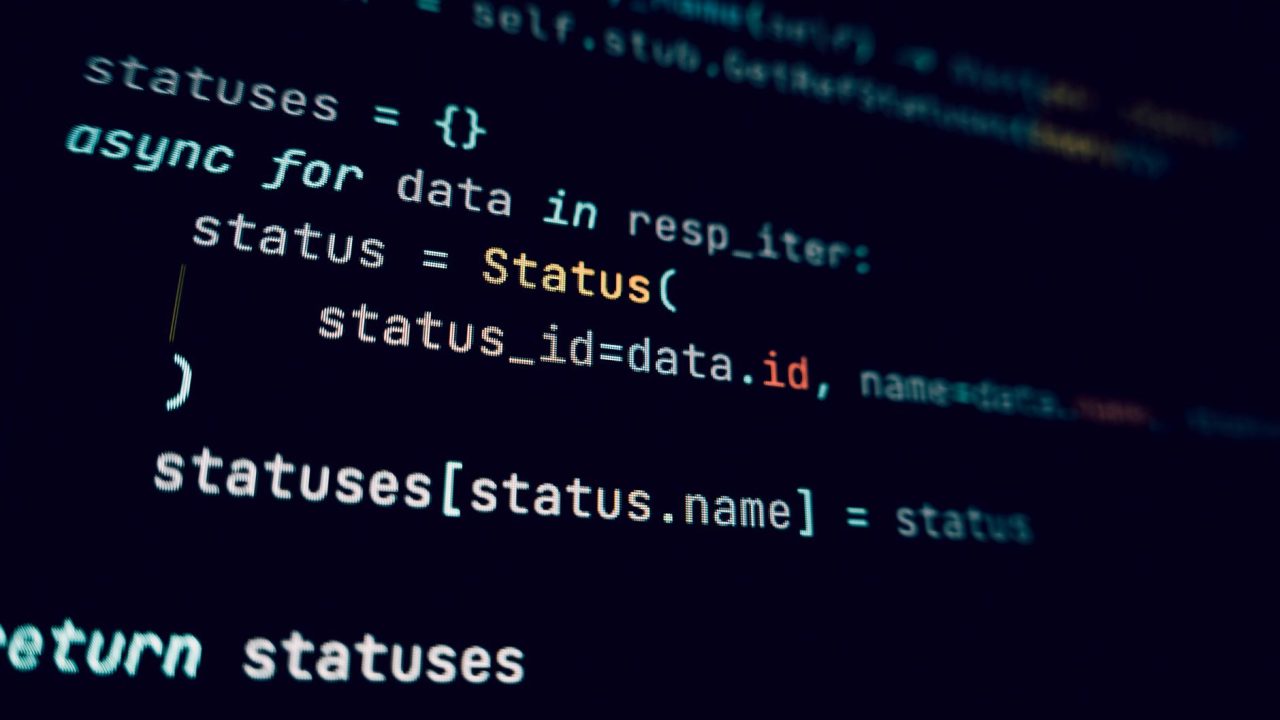
Here's a minimal A2A task lifecycle handler I'd write before letting agents loose:
class AgentTaskHandler:
 def __init__(self, event_bus, approval_service):
 self.event_bus = event_bus
 self.approval_service = approval_service

 async def handle_task(self, task_id: str, payload: dict):
 # Check if this payload needs human approval
 requires_approval = await self.approval_service.evaluate(
 task_id=task_id,
 action_type=payload.get("action"),
 magnitude=payload.get("value"),
 agent_id=payload.get("agent_id")
 )

 if requires_approval:
 self.event_bus.emit("escalation", {
 "task_id": task_id,
 "reason": "approval_required",
 "channel": "revops-escalations",
 "timeout_minutes": 30
 })
 # Task waits in INPUT_REQUIRED state
 return {"status": "INPUT_REQUIRED", "approval_pending": True}

 # Safe to execute
 return await self.execute_task(task_id, payload)
The approval service needs to be configurable, auditable, and fast. This isn't where you want latency to hurt.
My Actual Take
The article's framing around RevOps and enterprise workflows feels right to me. This isn't a pure engineering problem, it's a business control problem wearing an engineering hat. The fact that Google and Anthropic both donated their protocols to the Linux Foundation suggests the industry actually wants standardization here, which is rare and valuable.
What I'm skeptical about: whether most teams will actually implement the human-in-the-loop piece. It's cheaper to ship autonomous agents and cross your fingers. It's harder to build the monitoring, escalation, and approval workflows that make this safe. But if you're running revenue-impacting systems, that harder path is the only honest one.
What Are You Building?
If you're shipping multi-agent systems, what's your escalation strategy right now? Are you relying on soft guardrails, or have you actually built deterministic approval layers? I'd genuinely like to know what's working in production outside of enterprise contexts.
Source: This post was inspired by "Emerging AI Agent Protocols & Agent-to-Agent Handoffs: The 2026 Enterprise RevOps & Engineering Playbook" by Dev.to. Read the original article